

Non-Hotfix Stones
Flatback rhinestones without adhesive, so you choose the bonding method and keep complete control. Includes flatback, pointback, acrylic, and specialty shapes.
Non-hotfix is the only option when heat is off the table: nail art, jewelry settings, acrylic and resin surfaces, vinyl, coated or sequined fabric, and anything already constructed. It is also the better choice for repairs on finished pieces, where an iron would scorch the surrounding material.
Pair these with a gem-grade adhesive such as E6000 rather than hot glue, which goes brittle and yellows. For fabric that will be laundered, hotfix stones hold up better with far less work.
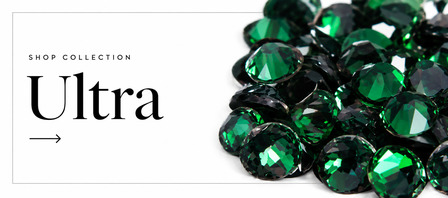
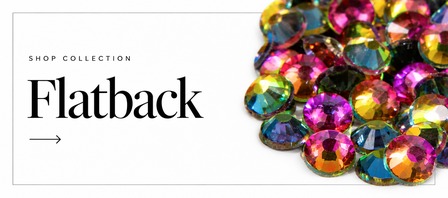
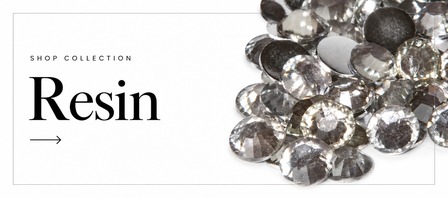
| Specification | Ultra | Flatback | Pointback | Resin | Acrylic |
|---|---|---|---|---|---|
| Millimeter Sizes | 3MM-6MM | 2MM-10MM | 2MM-6MM | 2MM-6MM | 8MM-35MM |
| Stone Sizes | SS10-SS30 | SS6-SS50 | SS6-SS30 | SS6-SS30 | N/A |
| Material | Crystal | Crystal | Crystal | Resin | Faceted Plastic |
| Color Options | 2 | 33 | 6 | 16 | 14 |
| Recommended Use | High End Projects | High End Projects | For Setting | Craft Projects | Craft Projects |
| Pricing Unit | Gross (144) | Gross (144) | Gross (144) | Gross (144) | Individually |
| Starting At | 80¢ / gross | 26¢ / gross | 17¢ / gross | 9¢ / gross | 2¢ / each |
Frequently Asked Questions
Hotfix rhinestones carry a heat-activated adhesive on the back. You position the stone, apply heat with an iron or heat press, and the glue melts into the fabric and cures as it cools. Nothing else is needed and the bond is permanent.
Non-hotfix rhinestones — also called flatbacks — have no adhesive at all. You choose the bonding method yourself: E6000 or a gem glue for hard surfaces, nail adhesive for nail art, or a setting for jewelry. That is more work, and it is the only option when the surface cannot take heat.
The stone itself is often identical. The backing is what you are choosing between.
Use hotfix when the item is fabric and will be washed. Shirts, hoodies, letterman jackets, dance costumes, team uniforms, tote bags, caps. The adhesive is engineered to survive laundering, which hand-applied craft glue on fabric generally is not.
Use non-hotfix when heat would ruin the item or cannot reach the surface: nail art, jewelry settings, acrylic and resin surfaces, vinyl, leather with a delicate finish, sequined or heavily coated fabrics, and anything already assembled where a press cannot close on it.
You can, but you are working against the product. The adhesive layer on a hotfix stone sits between the glass and the surface, so glue has to bond to cured adhesive rather than to the stone itself, and the join is weaker than it would be with a true flatback.
If the project needs glue, buy non-hotfix flatbacks. They cost the same or less and they are made for it.
Most hotfix glass runs at roughly 330–350°F for 15–20 seconds with firm, even pressure. Cotton and poly-cotton take the upper end of that range; thin synthetics and performance fabrics take the lower end with a longer dwell rather than more heat.
The variables that actually decide the result are pressure and cooling, not temperature. Press hard enough to push the stone into the weave, then let the piece cool completely before you touch it — the bond forms as the adhesive sets, not while it is hot.
Always test on a scrap of the same fabric first. A heat press that reads 340°F at the gauge is not always 340°F at the platen.
Our hotfix range covers MC Glass rhinestones, Korean rhinestones, rhinestuds, and nailheads in sizes SS6 through SS40. MC Glass is genuine machine-cut glass with quality comparable to Preciosa. Korean stones are the cost-conscious choice with excellent run consistency for machines and templates. Rhinestuds and nailheads are metal, which makes them the economical option for large-coverage work like team uniforms and denim.
Yes, when they are applied correctly. Turn the garment inside out, wash cold on a gentle cycle, and either hang dry or tumble on low. Skip bleach and fabric softener — softener leaves a film that works loose at the adhesive edge over time.
Stones that fall off in the first wash almost always indicate under-pressing rather than a bad stone: not enough pressure, not enough dwell, or the piece was moved before it cooled.